






Marketing Mix Modeling

MMM that connects your total media investment to real business outcomes

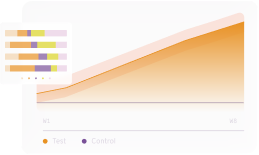
Marketing mix modeling graphic with a spend response curve for search and social, plus MQL, ROAS and SQL metrics
Marketing mix modeling calibrated with incrementality testing, showing what drives total revenue across every channel.
Marketing mix modeling graphic with a spend response curve for search and social, plus MQL, ROAS and SQL metrics
We help companies build sustainable growth programs, powered by the right platforms and tools.

Where most marketing mix modeling goes wrong

Campaign-level attribution can't answer the questions that matter most to senior marketing leaders. Which channels are driving total business growth? How much of our revenue would exist without paid media? What is the right split between brand and performance investment? Attribution was never built to answer these questions.

MMM is an analysis that needs to run regularly to stay current and actionable. A model built once on historical data becomes less useful every month as the market, the media mix, and the business change. Most brands treat it as a one-time project and wonder why the outputs stop feeling relevant.

MMM results are only as good as the data going in. Brands with broken tracking, incomplete spend data, or unresolved cross-platform discrepancies get models that produce confident-looking outputs built on unreliable inputs.

Work With Us

Our approach to marketing mix modeling

Every program runs on a single integrated system where measurement informs creative, creative informs media, and media decisions are validated by data. The result is a cycle of learning that compounds over time, not a set of disconnected tactics that reset every quarter.

Reliable inputs

MMM run on a regular cadence so strategic decisions are always built on current evidence. ThriveStack pulls clean, reconciled spend and revenue data from every source before modeling begins so the model is built on reliable inputs.

Calibration

MMM calibrated with incrementality testing so geo-holdout experiments validate channel-level findings and each methodology makes the other more reliable. Results connect directly to media planning so budget allocation is informed by what actually drives total business growth.

Clear boundaries

Clear boundaries maintained around what MMM can and cannot tell you. Long-term channel contribution, diminishing returns curves, and total revenue decomposition are in scope. Day-to-day campaign optimization is not. Each MMM run updates the assumptions that drive the next set of strategic decisions.
Work With Us

How we've helped brands like yours

From proving which channels really drive sales to creative that beats in-house ads, here's what we delivered.

Thrive empowers companies big and small to build sustainable growth programs.

uber
tempurpedic
masterclass
square
asana

“Thrive worked hand-in-hand with our in-house team to craft a bold strategic vision for our digital marketing program, and then ensured that every detail and dollar was accounted for in our campaigns. Asana's acquisition program is more effective thanks to our partnership and co-creation with Thrive.”

smith

“Thrive has been a key partner for helping Smith transform from a traditional wholesale business to a digitally minded consumer-first brand. Helping us acquire new customers for all our channels. They move fast and are extremely proactive”

snapchat
classpass
earnest

“The team at Thrive Digital is great to work with. They are diligent, strategic and deeply focused on the details. Thrive is a rare breed among digital marketing agencies.”

arcteryx
lululemon
coinbase
gofundme
Marketing mix modeling is a statistical analysis that breaks down total revenue into contributions from each marketing channel, including channels that don't show up in attribution reports like linear TV and offline. Use it when you need to make strategic budget allocation decisions across the full program.
Explore incrementality testing
Attribution tracks individual user journeys and assigns credit to touchpoints within them. MMM analyzes aggregate spend and revenue patterns over time to estimate channel contributions at the program level. Attribution informs tactical decisions and channel-level optimization. MMM is built for strategic decisions: total budget allocation, brand versus performance split, and long-term channel investment.
Explore analytics and attribution
At minimum quarterly, monthly for brands with significant media investment or a fast-changing media mix. A model built once on historical data becomes less accurate as the market and the business evolve. Thrive runs MMM on a regular cadence so every decision is built on current evidence.
Explore media planning
Typically two to three years of weekly spend and revenue data across all channels, plus relevant external variables like seasonality, pricing, and competitive activity. Less data produces models with wider confidence intervals and less reliable channel-level estimates. Thrive assesses data readiness at the start of every engagement.
Explore data engineering
MMM produces channel-level revenue contribution estimates and diminishing returns curves, showing where additional investment has the most runway and where channels are over-invested. These outputs feed directly into the media plan so budget follows evidence rather than historical patterns.
Explore media planning
MMM analyzes historical aggregate data to estimate long-term channel contributions. Incrementality testing runs controlled experiments in real time to measure causal impact at the campaign level. They answer different questions at different time horizons. Used together, they make each other more reliable.
Explore incrementality testing